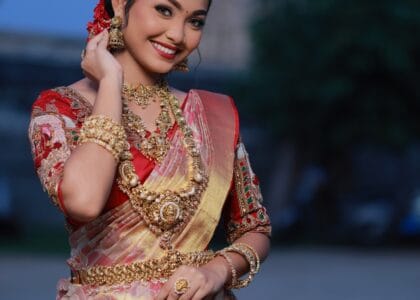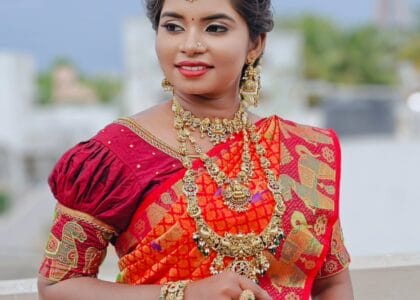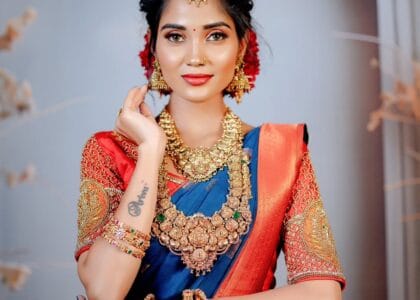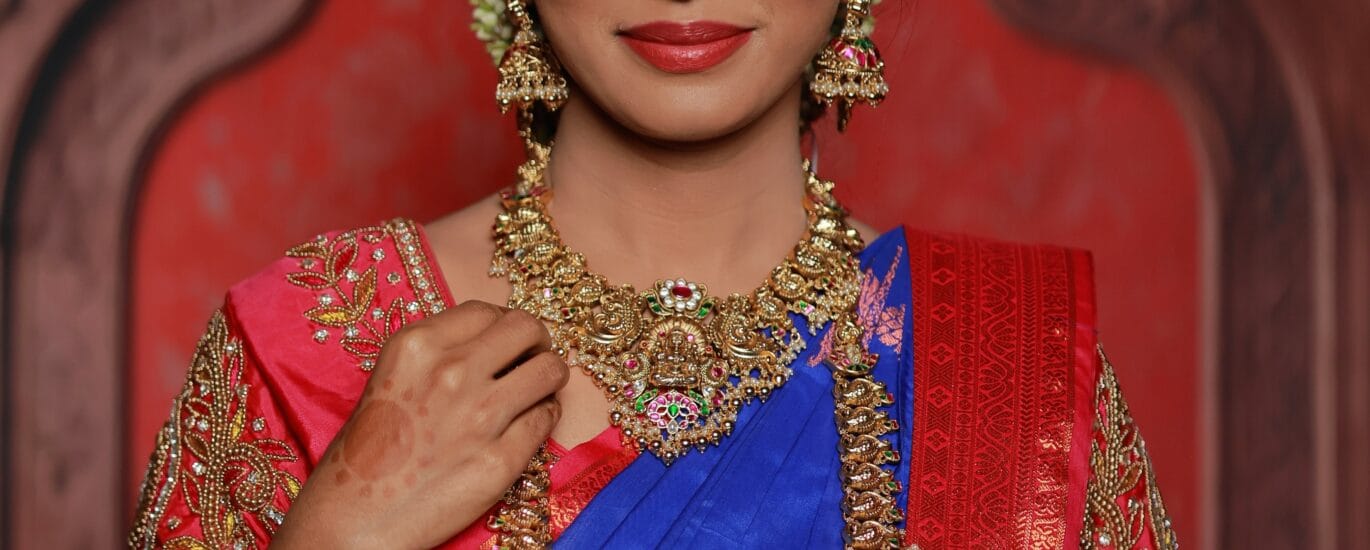
South Indian weddings are known for their rich traditions, vibrant ceremonies, and beautiful bridal attire. One of the most important aspects of a bride’s appearance is her jewellery. Traditional South Indian bridal jewellery is not only designed for beauty but also carries deep cultural meaning and symbolism.
From temple-inspired necklaces to elegant bangles and waist belts, each jewellery piece worn by a South Indian bride represents prosperity, strength, protection, and marital harmony. Understanding the significance of these ornaments helps brides appreciate the cultural heritage behind every detail of their wedding look.
Temple Necklace (Haram)
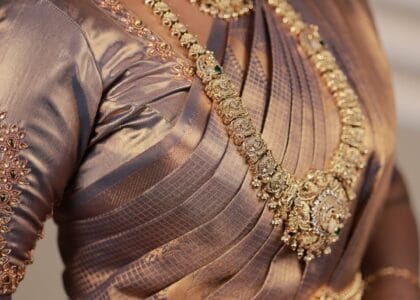
The temple necklace, also known as haram, is one of the most recognizable pieces of traditional South Indian bridal jewellery. These necklaces are usually inspired by temple architecture and often feature motifs of deities, flowers, and traditional patterns.
Temple jewellery is typically worn during wedding ceremonies because it represents prosperity and blessings from the divine. The long layered design also complements traditional silk sarees beautifully, making it a central piece in the bridal jewellery set.
Brides who want to understand how jewellery combinations are styled can also explore this guide:
Maang Tikka
The maang tikka is placed on the center of the bride’s forehead and connected to the hairline. This ornament holds both aesthetic and symbolic importance.
Traditionally, the maang tikka represents spiritual union and balance. It is placed at the point between the eyebrows, which is considered an important energy center in Indian tradition.
In South Indian weddings, the maang tikka adds elegance to the bride’s hairstyle and frames the face beautifully.
Bridal Earrings (Jhumkas)
Large traditional earrings, often called jhumkas, are an essential part of South Indian bridal jewellery. These earrings are typically detailed with intricate carvings, temple motifs, or stone embellishments.
Apart from enhancing the bridal look, earrings are believed to represent feminine strength and grace. Jhumkas also balance the overall jewellery arrangement when paired with necklaces and hair accessories.
Vanki (Armlet)
The vanki, also known as an armlet, is worn on the upper arm. This V-shaped ornament has been a part of traditional bridal dressing for centuries.
Historically, armlets symbolized strength and protection. Today they are worn mainly for their aesthetic appeal and their ability to enhance the elegance of the bride’s attire.
When combined with bangles and necklaces, the armlet helps create a complete and balanced bridal jewellery look.
Bridal Bangles
Bangles hold a special place in Indian wedding traditions. In South Indian culture, bangles symbolize prosperity, happiness, and marital harmony.
Brides often wear multiple bangles made of gold or imitation jewellery, sometimes combined with stone-studded designs. The sound of bangles is traditionally associated with positive energy and celebration.
Brides searching for elegant jewellery options can also explore ideas discussed in this article:
Waist Belt (Oddiyanam)
The oddiyanam, or waist belt, is another iconic piece of South Indian bridal jewellery. It is worn around the waist over the saree to secure the drape and enhance the silhouette.
Apart from its functional purpose, the waist belt symbolizes prosperity and femininity. The intricate designs often include floral patterns, temple motifs, and traditional carvings.
This jewellery piece adds grandeur to the overall bridal appearance.
Anklets (Kolusu)
Anklets, known as kolusu, are delicate ornaments worn around the ankles. In many Indian traditions, anklets represent grace and auspiciousness.
They also add a subtle musical charm when the bride walks, enhancing the ceremonial atmosphere of the wedding.
Although simple compared to necklaces and bangles, anklets complete the traditional bridal ensemble.
Jewellery for Muhurtham Ceremony
The muhurtham ceremony, which is the most sacred part of a South Indian wedding, often requires specific jewellery styles. Brides usually choose traditional temple jewellery sets, layered necklaces, and elegant accessories to reflect the importance of the ritual.
If you want to explore jewellery styles commonly chosen for this ceremony, you may find useful ideas here:
Cultural Significance of South Indian Bridal Jewellery
Traditional bridal jewellery in South India represents much more than decoration. Each ornament reflects centuries of cultural heritage, craftsmanship, and symbolism.
From temple-inspired necklaces to elegant waist belts and bangles, these pieces tell a story of tradition and celebration. Many modern brides continue to incorporate these elements into their wedding attire while blending them with contemporary jewellery styles.
For a deeper understanding of Indian jewellery traditions, cultural resources such as Cultural India offer insights into the history and symbolism of traditional jewellery.
These traditional styles are still trending. See bridal jewellery trends in Tamil Nadu
Final Thoughts
South Indian bridal jewellery is a beautiful reflection of tradition, craftsmanship, and cultural meaning. Every ornament worn by a bride contributes to a timeless wedding look that has been cherished for generations.
By understanding the significance of each jewellery piece, brides can choose designs that not only enhance their appearance but also celebrate the traditions that make South Indian weddings so special.